Bahasa melayu
 中文
中文
















Is Your Child's Vision Getting Worse Every Year? The Most Overlooked Eye Care Gaps Parents Must Know
Myopia Isn't Just GeneticIt's Often Due to Overlooked Daily Habits
Over the past decade, childhood myopia has skyrocketed, with reports of children needing glasses as early as primary three becoming increasingly common. According to data from the World Health Organization, over 300 million children worldwide face various degrees of vision problems, with Southeast Asia among the hardest-hit regions. While many parents blame screen time or heredity, the real culprit behind deteriorating eyesight often lies in everyday habitsespecially overlooked "eye care gaps."
Children today live in a high-blue-light, high-screen-time environment. From online classes and homework to games and YouTube videos, it's common for them to spend over six hours a day staring at screens. You might tell your child to avoid watching TV too closely, but are you missing these hidden threats to their vision?
Eye Care Gap 1: Poor Eye Posture and Viewing Distance
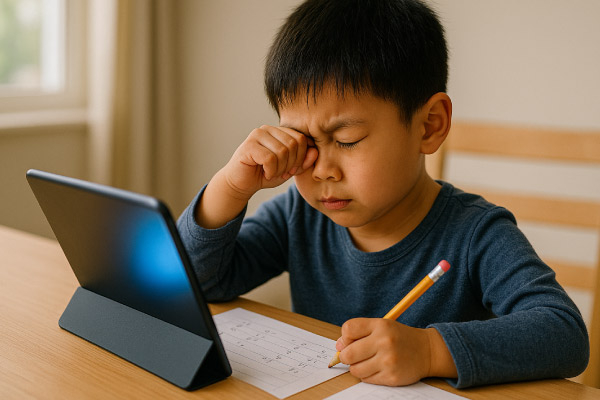
Many children have the habit of lying down while using a phone, hunching over when writing, or reading in dim lighting. These positions place extra strain on the eye's focusing muscles, potentially leading to blurred vision, dry eyes, or even eye misalignment.
Suggestions:
- Maintain a reading or screen distance of 30–40 cm
- Ensure sufficient and shadow-free lighting
- Use eye-friendly desk lamps or natural light
Eye Care Gap 2: Continuous Screen Time Without Breaks
Watching a tablet or playing video games for long periods keeps the eye’s ciliary muscles locked in contraction, leading to what's known as accommodative myopia. Studies show that screen use exceeding 40 minutes at a time significantly increases eye pressure, potentially triggering dry eye symptoms.
Suggestions:
- Apply the 20-20-20 rule: every 20 minutes, look 20 feet away for 20 seconds
- Schedule at least two 30-minute outdoor breaks under natural light daily
Eye Care Gap 3: Underestimating Blue Light Damage
Many parents believe that as long as their child isn’t too close to the screen, they’re safe. In fact, blue light damage has nothing to do with distance, but everything to do with wavelength. High-energy blue light from LED screens and smartphones can damage the retina and accelerate macular degeneration over time.
Suggestions:
- Enable "eye protection" or night mode on devices
- Avoid using bright screens in dark rooms
- Consider antioxidant-rich eye supplements that target blue light protection
Eye Care Gap 4: Poor Nutritional Support for Eye Health
Modern diets are often high in fat and sugar but low in essential nutrients like vitamin A, lutein, and anthocyaninsall critical for eye repair and defense against oxidative stress.
Suggestions:
- Include dark green vegetables and orange-colored fruits at least three times a week
- Add antioxidant-rich berries like bilberries and blueberries
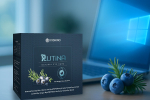
- For picky eaters, consider daily eye health supplements like Iyashino Rutina

How to Choose the Right Eye Supplement for Your Child? Iyashino Rutina Is a Top Pick
Don’t wait for a prescriptionstart protecting your child’s eyes from within. Iyashino Rutina is a scientifically formulated eye supplement trusted by parents across Asia. Designed specifically for today’s screen-heavy environment, it blends traditional botanical wisdom with modern absorption technology.
This product combines high-concentration wild bilberry extract with Japanese juniper berry, helping to:
- Relieve eye muscle fatigue and reduce blurry distance vision
- Neutralize free radicals caused by blue light, protecting the retina and macula
- Strengthen capillary elasticity to support nighttime clarity and reading comfort
Safe and gentle, Iyashino Rutina is suitable for daily use by school-age children. One sachet per day helps maintain comfort and sharpness, even during long hours of study or screen use.
Self-Test: Is Your Child at Risk of Vision Deterioration?
Observe your child and see if they match three or more of the following:
- Frequently rubs or squints to see clearly?
- Tilts head or leans in too close when doing homework?
- Says “I can’t see” when watching TV or using projectors?
- Prefers dim environments and avoids switching on lights?
- Uses smartphones/tablets for more than 2 hours daily?
- Complains of eye pain or visual fatigue?
- Says “things look blurry” when riding in a car?
If three or more apply, it's time for a vision screeningand to start an eye care routine.
Parental Awareness Is the First Step Toward Clearer Vision
Vision loss often progresses silently. Once past the early stage, correction becomes harder and dependence on glasses may become permanent. Instead of reacting after the problem appears, proactive eye protection is key.
Start today by addressing these overlooked habits and supporting your child's eye health from the inside out.
For more eye care tips and to learn about natural support with Iyashino Rutina, visit Bai Zi Gui